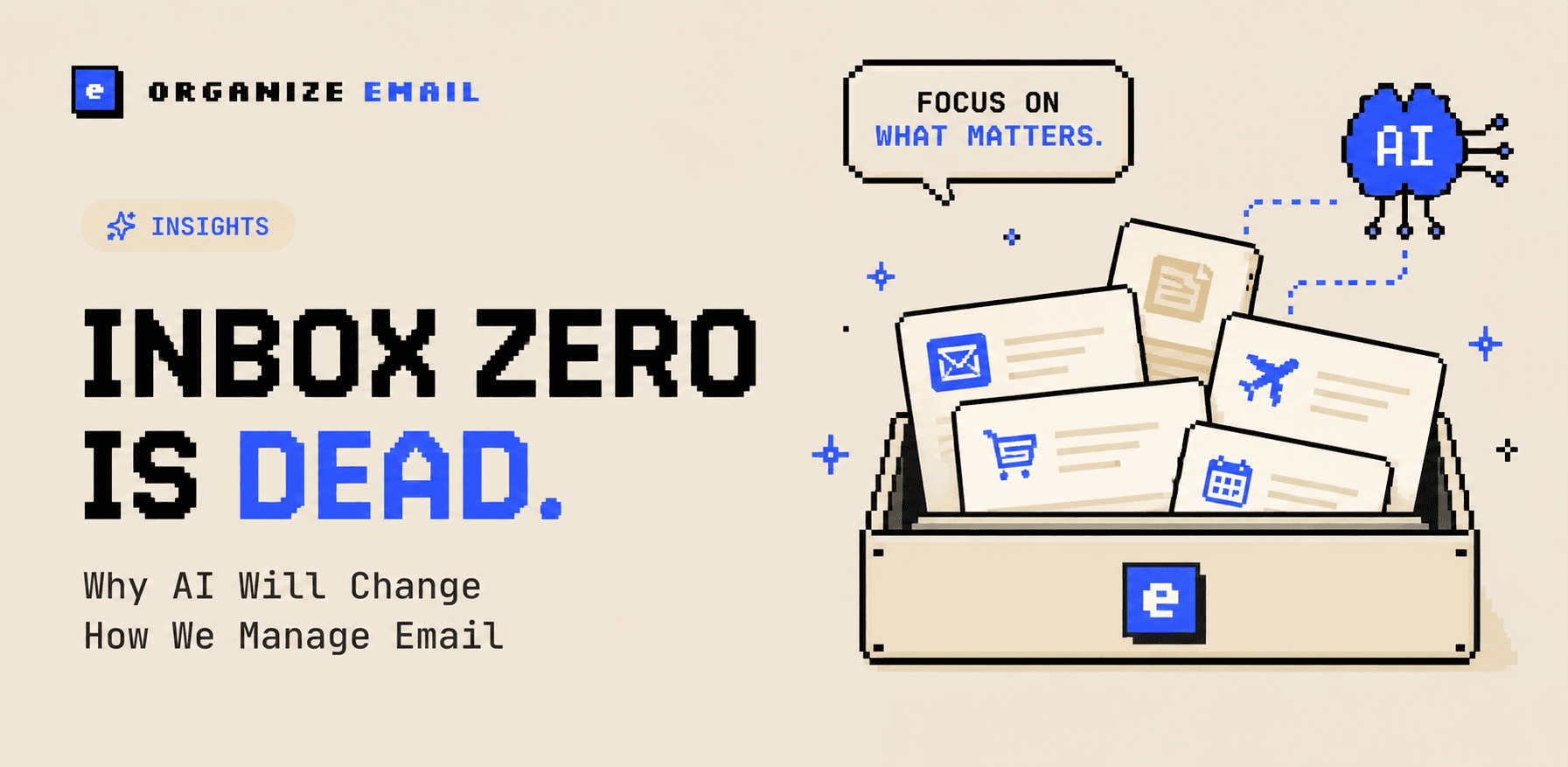
For years, "Inbox Zero" has been treated as the gold standard of productivity.
The idea is simple: clear your inbox until there are no unread emails left. Archive everything, organize it into folders, and stay on top of every message.
It sounds great in theory.
In reality, most people have already given up.
Modern inboxes are not just filled with conversations. They are flooded with newsletters, receipts, bank alerts, travel updates, promotional offers, OTPs, meeting invitations, subscription renewals, and countless automated notifications.
The problem is not that we are bad at managing email.
The problem is that email has changed.
Think about everything that arrives in your inbox today:
- Flight tickets
- Hotel bookings
- Utility bills
- Package tracking
- Calendar invitations
- Payment confirmations
- Work discussions
- Password reset links
- Newsletters
- Shopping receipts
Many of these emails are not meant to be read immediately.
Some are only useful weeks or months later.
Others are important for just a few minutes.
Treating every email with the same priority simply does not make sense anymore.
Search Replaced Organization
Years ago, people carefully created folders and labels.
Today, many users simply type a keyword into the search bar.
Need your flight ticket?
Search the airline name.
Looking for a receipt?
Search the store.
Need an old conversation?
Search the person's name.
Search has become more valuable than manual organization.
But search still assumes one important thing:
You already know what you are looking for.
The Real Problem Is Prioritization
Imagine opening your inbox and seeing 150 unread emails.
Only five actually need your attention today.
The challenge is not reading all 150.
It is identifying the five that matter.
This is where traditional email clients begin to struggle.
They organize messages chronologically.
Humans do not think chronologically.
We think in terms of importance.
AI Changes the Equation
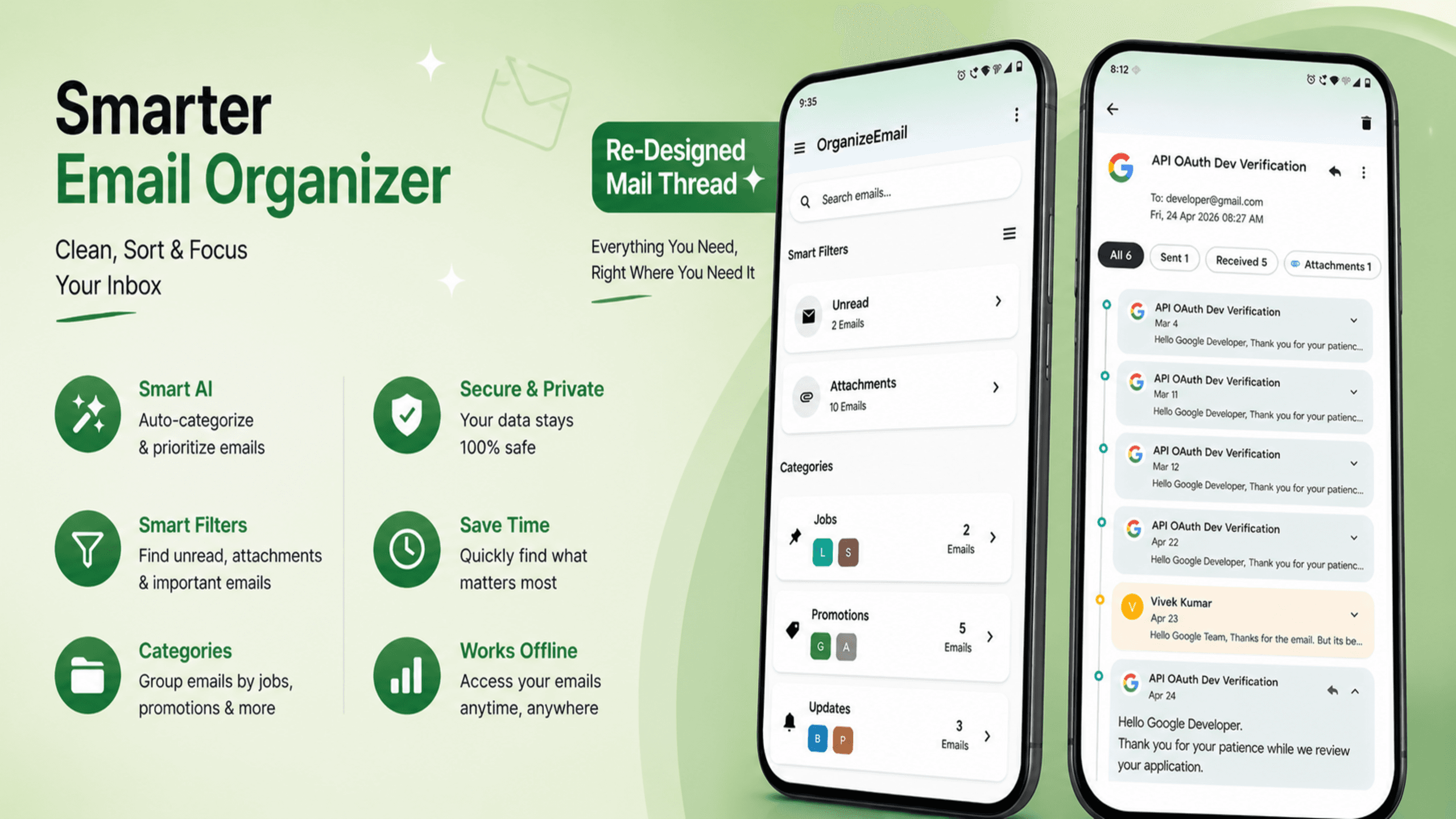
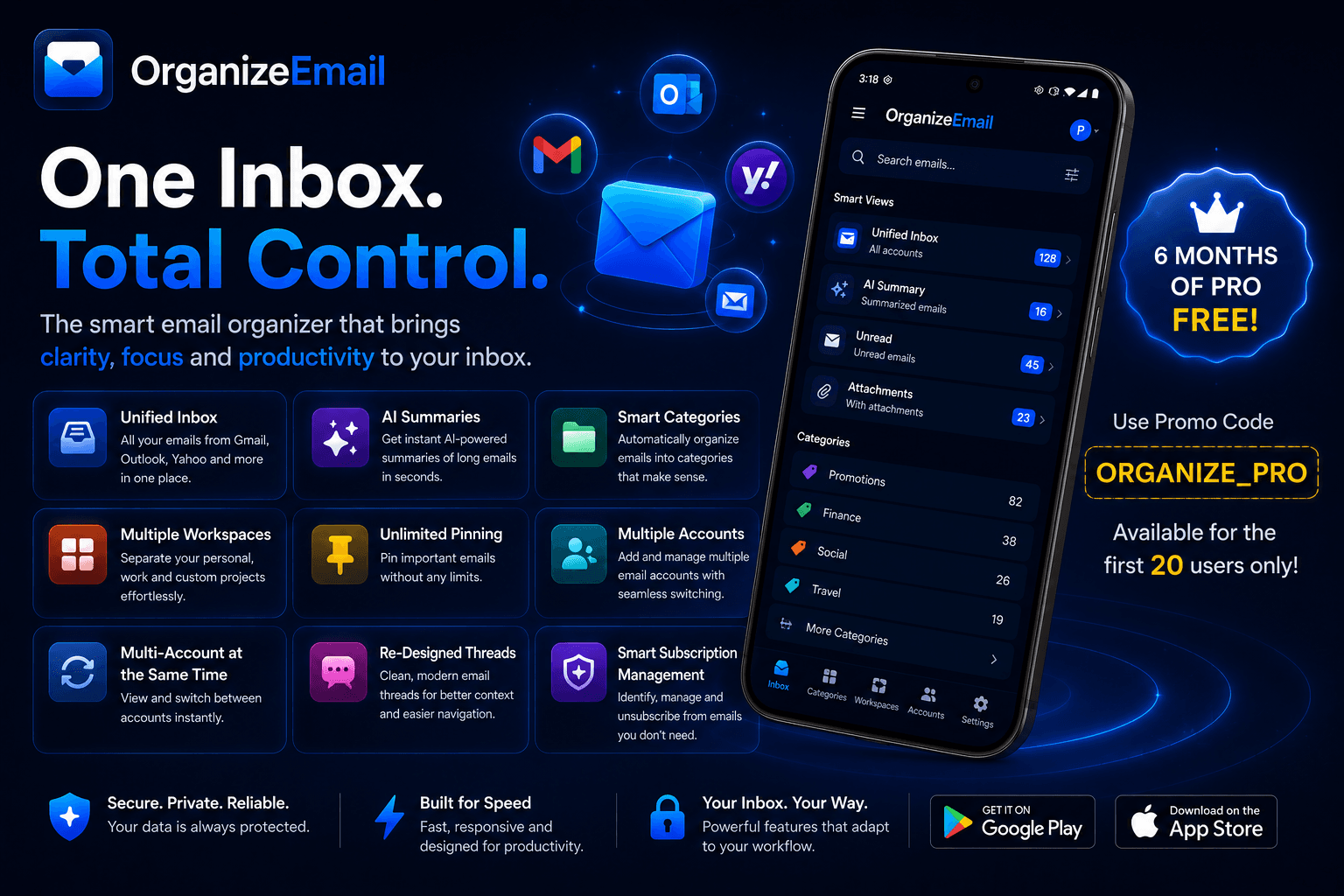
Artificial intelligence has the potential to shift email from passive storage to active assistance.
Instead of asking users to manually organize every message, AI can understand context.
For example, it can:
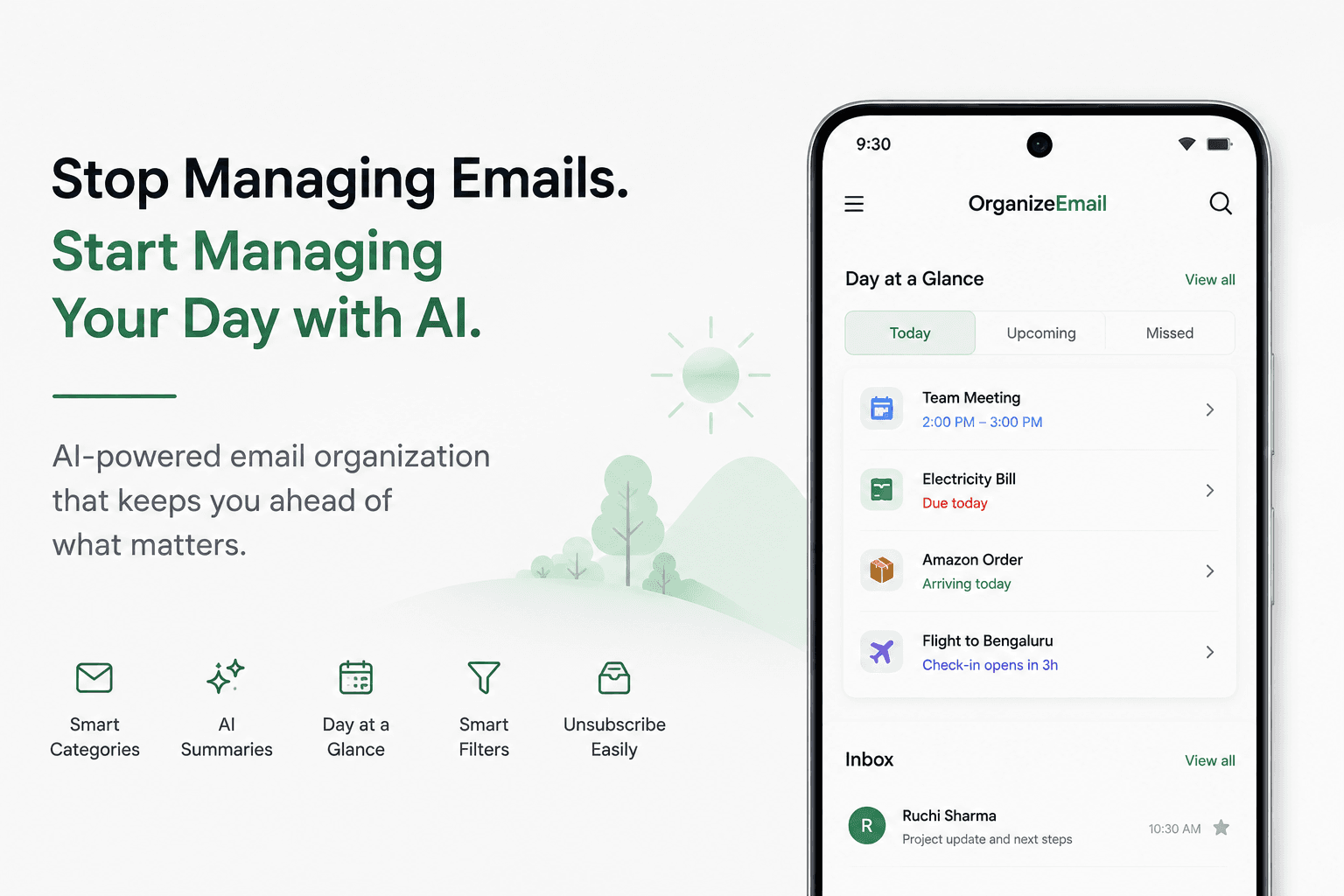
- Highlight emails requiring immediate action
- Group travel-related emails together
- Detect upcoming bills
- Summarize long conversations
- Separate promotional emails from important updates
- Surface meeting invitations before they are forgotten
Rather than replacing email, AI helps people focus on what matters most.
Privacy Matters More Than Ever
As AI becomes part of everyday productivity tools, privacy becomes equally important.
Many users are understandably cautious about sharing personal emails with cloud-based services.
This has led to growing interest in privacy-first approaches, including on-device AI, where processing happens locally instead of sending sensitive information to external servers.
For productivity tools, earning user trust may become just as important as building intelligent features.
The Future Is Not Inbox Zero
Perhaps the goal was never to have zero emails.
Maybe the real goal is having zero anxiety about your inbox.
Imagine opening your email and immediately knowing:
- What requires action today
- What can safely wait
- What can be ignored entirely
Instead of spending time sorting information, you spend time acting on it.
That is a much more meaningful measure of productivity.
Final Thoughts
Email is not disappearing anytime soon.
If anything, it is becoming even more central to our personal and professional lives.
The next generation of email tools will not win by offering more folders or more filters.
They will win by understanding context, reducing information overload, and helping users make faster decisions.
The future of email is not about managing more messages.
It is about needing to think less about them.
 Product